The three questions
- My ex and I broke up four months ago and we still text every couple of weeks. I keep wondering whether there is a real chance for us or whether I am just holding on.
- I have been in the same job for three years and I feel stuck, but every time I think about leaving I talk myself out of it in case it turns out to be a mistake.
- Why do I keep ending up in relationships where I give much more than I get back?
The energy around this reading
Across the overall twelve-card layout, the distribution of four Major Arcana alongside four court cards highlights a structural tension between high-stakes internal shifts and the noticeable presence of external dynamics in your decision-making. With five cards appearing in reverse, the symbolic emphasis falls on internal delays—places where momentum has slowed or where themes are being held inward rather than expressed outward. This balance suggests that while external situations and other people occupy significant mental real estate, the primary friction is happening within your own willingness to take decisive action. Rather than external forces blocking your path, the cards point to a period of internal deliberation where passive endurance has gradually substituted for active choice.
Card distribution: 12 cards drawn; 4 Major Arcana; 4 court cards, so other people are noticeably present across the reading; 5 cards reversed, so several themes appear held back or turned inward.
Question 1
“My ex and I broke up four months ago and we still text every couple of weeks. I keep wondering whether there is a real chance for us or whether I am just holding on.”
-
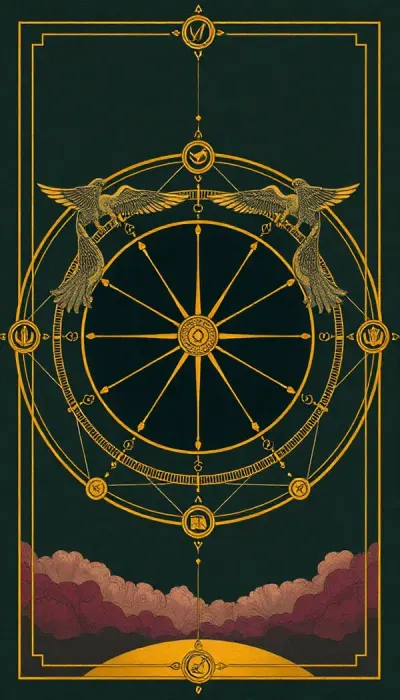 Wheel of Fortune What remains emotionally active
-
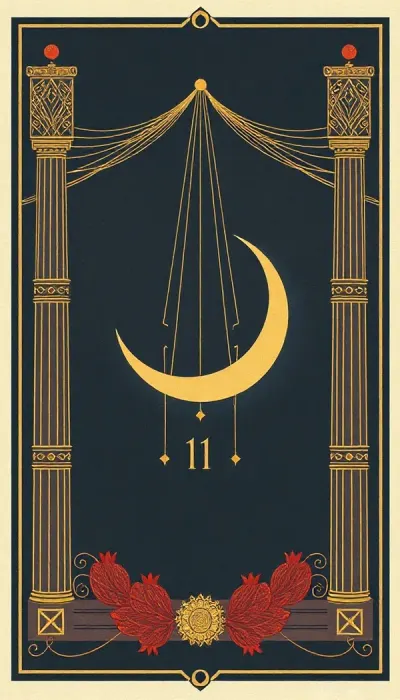 The High Priestess (reversed) The pattern that keeps pulling you back
-
 The Emperor (reversed) What supports your clarity
The surface issue
You are asking whether continuing to text your ex every few weeks means there is a genuine path back together, or if you are simply lingering in hope. A reading cannot establish another person's future intentions. What this spread can examine, however, is what this current cycle of contact is actually costing you and whether it is serving your clarity or keeping you suspended.
What the cards highlight
In the position of what remains emotionally active, the Wheel of Fortune upright suggests that you are caught in a recurring cycle where periodic contact acts like a fresh roll of the dice, keeping the dynamic feeling fluid rather than finished. It highlights a tendency to wait for external shifts or momentum to decide the relationship's direction for you. Moving to the pattern that keeps pulling you back, The High Priestess reversed points to an environment where important truths remain unsaid, or where you are overriding your own quiet instincts to maintain low-stakes contact. This dynamic relies on staying on the surface—texting every couple of weeks without addressing the core reality of the breakup—which leaves room for anxiety to fill the silence. Finally, in what supports your clarity, The Emperor reversed highlights a current lack of firm structure or defined boundaries. Without clear terms established by you, the situation defaults to an unstructured drift where neither of you is actively choosing or closing the door. Symbolically, these three cards point away from waiting for a sudden turn of circumstances and suggest that clarity will come from setting your own clear boundary rather than reacting to sporadic messages.
The deeper dynamic
Underneath the question of potential reconciliation is a struggle between structure and uncertainty. The occasional check-in creates just enough emotional ambiguity to delay the finality of grief. By staying in a passive stance—waiting to see what the next text implies—you avoid the temporary discomfort of deciding that this intermittent contact is no longer enough. The High Priestess reversed combined with The Emperor reversed suggests that staying in contact without defining what it actually means acts as a substitute for making a firm decision. Holding onto this dynamic gives a false sense of connection while actively preventing you from fully stepping into your own independence or allowing the past cycle to complete cleanly.
What you may be missing
What may be overlooked is that low-frequency contact often preserves ambiguity rather than building real intimacy. Texting every few weeks does not necessarily indicate a foundation for rebuild; it can simply be a routine habit that keeps both people from facing the full reality of the separation. The Emperor reversed suggests that by allowing the relationship to exist without explicit terms or direction, you may be ceding control over your emotional timeline. Staying in this middle ground costs emotional energy that could otherwise be used to establish solid ground for yourself.
What is in your control
- Setting a personal boundary regarding how often or whether you text your ex.
- Directing your emotional energy toward building stability in your own daily life.
- Deciding if low-frequency contact genuinely serves your long-term peace of mind.
- Asking explicit questions if you choose to address the dynamic directly.
What is not
- Whether your ex ultimately wants to rebuild a relationship with you.
- How your ex feels, interprets, or responds to the current distance.
Bottom line
The cards symbolically suggest that periodic contact is keeping you in an open-ended loop rather than moving you toward resolution. A reading cannot promise what your ex will choose, but this spread indicates that remaining in an undefined middle ground is delaying your own clarity. Deciding your own terms for contact will do more to resolve your uncertainty than waiting to see how the next text lands.
Question 2
“I have been in the same job for three years and I feel stuck, but every time I think about leaving I talk myself out of it in case it turns out to be a mistake.”
-
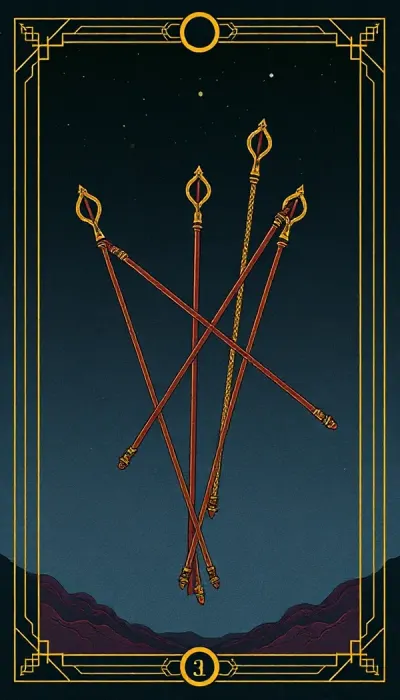 Five of Wands (reversed) Your current position
-
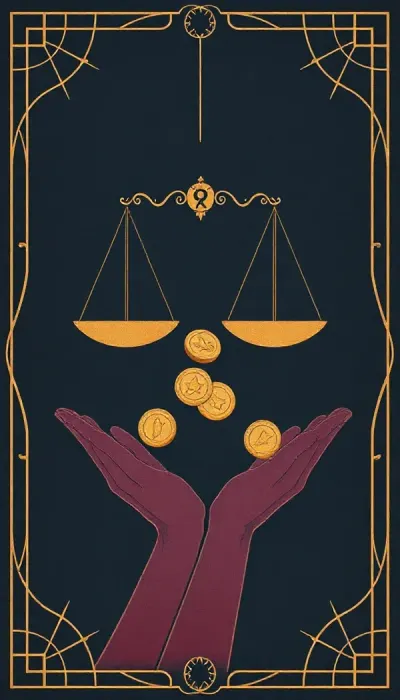 Six of Pentacles The opportunity or the obstacle
-
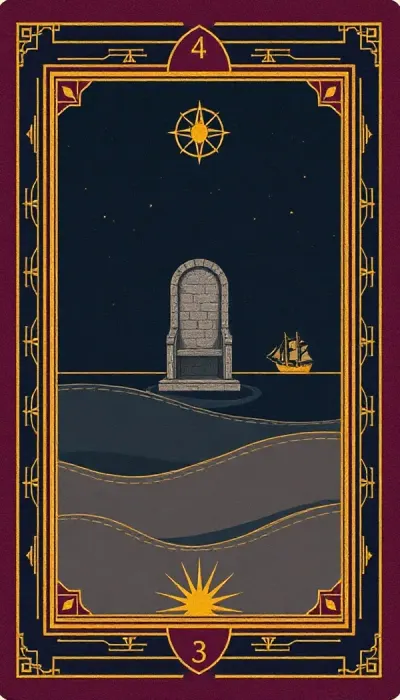 King of Cups Your best area of focus
The surface issue
You have stayed in your current role for three years, feeling stuck yet consistently talking yourself out of leaving due to the fear of making a mistake. This matters because your desire for growth is constantly overridden by a need for certainty, keeping you suspended between real dissatisfaction and hypothetical regret.
What the cards highlight
In your current position, the Five of Wands reversed points toward an internal exhaustion where the friction is no longer outward competition, but a quiet, ongoing battle within yourself. You spend considerable energy talking yourself out of action, leaving you drained without actually resolving anything. Standing in the position of the opportunity or obstacle, the Six of Pentacles highlights the structure of exchange in your current job. This card symbolically suggests that predictable compensation, familiar security, or steady support may be acting as a gilded cage—offering enough baseline balance to make leaving feel ungrateful or unnecessarily risky, even if the terms no longer serve your long-term growth. Moving into your best area of focus, the King of Cups suggests bridging the gap between your emotional hesitation and practical judgment. Rather than letting panic about a potential mistake dictate your career path, this spread highlights the need for calm, regulated stewardship of your own career. This means integrating how you actually feel about staying with a clear-headed evaluation of realistic next steps, allowing emotional clarity to guide your decisions rather than unexamined fear.
The deeper dynamic
The deeper pattern here is not a lack of options, but a reliance on fear to maintain the status quo. You are treating the risk of moving as an absolute catastrophe while treating the risk of staying as neutral, even though remaining stuck actively erodes your confidence every day. The internal debate has become a substitute for real decision-making. By constantly debating whether leaving is a mistake, you avoid taking accountability for choosing to stay. The anxiety feels like protection, but it actually functions as a delay tactic that keeps you from discovering what you are capable of handling outside your current safety net.
What you may be missing
What may be overlooked is the implicit cost of the current exchange. The Six of Pentacles reminds us that security always comes with terms. You may be viewing your job's stability as purely beneficial, while ignoring how it conditions you to accept low-level dissatisfaction in exchange for predictable routines. Safety that requires you to suppress your ambition is not free; it is paid for with your momentum and trust in your own resilience.
What is in your control
- Evaluating your current job based on present facts rather than hypothetical future mistakes.
- Setting concrete criteria for what a worthwhile career move would look like.
- Choosing to update your resume and explore options without committing to leave.
- Noticing when self-talk is being used to rationalize staying in discomfort.
What is not
- Guaranteeing that a new job will be entirely free of challenges.
- Controlling how your current employer responds if you choose to exit.
- Eliminating all uncertainty before making a major life decision.
Bottom line
Staying out of fear of making a mistake is still a decision, and it carries its own consequences. The cards don't give you a strong reason to keep building your choices around hypothetical worst-case scenarios. Ground your judgment in practical reality: assess your skills calmly, look at market realities, and recognize that trusting your ability to navigate new challenges is the only real security available.
Question 3
“Why do I keep ending up in relationships where I give much more than I get back?”
-
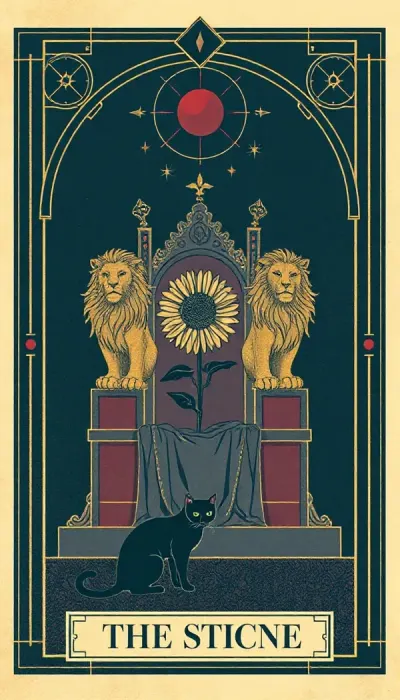 Queen of Wands The current dynamic
-
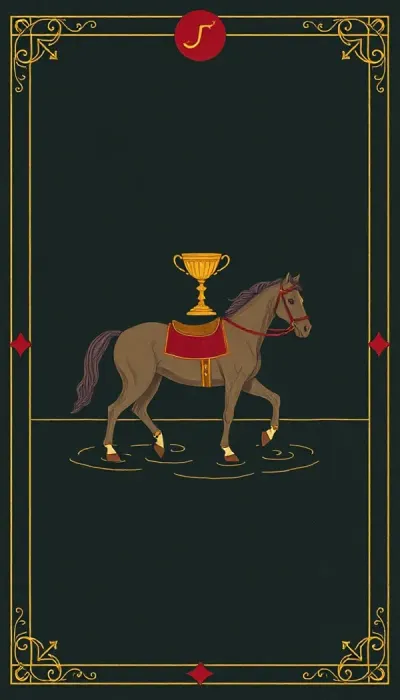 Knight of Cups (reversed) The hidden emotional pattern
-
 Five of Cups What you need to know
The surface issue
You are asking why your relationships consistently leave you carrying the majority of the emotional effort. This matters because repeatedly over-giving creates a cycle of exhaustion and resentment, making you question whether your generosity is being exploited or if something in your selection process and boundary setting keeps leading you back to the same unbalanced dynamic.
What the cards highlight
The Queen of Wands in the position of your current dynamic suggests that you enter relationships with a warm, magnetic, and highly capable presence. You bring vitality and generosity to connections, naturally taking charge of emotional momentum. However, the hidden emotional pattern revealed by the reversed Knight of Cups points to a subtle vulnerability: being drawn to romantic promises, charm, or potential that ultimately lacks consistent follow-through. When a partner offers emotional idealism without practical substance, your instinct as the Queen of Wands is not to withdraw, but to step up—using your energy to compensate for their lack of effort. You try to build the connection that was promised. What you need to know, shown by the Five of Cups in the final position, is that this cycle leaves you focused on grieving unfulfilled expectations. This card highlights a fixation on the disappointment of what did not work while missing what is actually required for true reciprocity. The cards symbolically suggest that your over-giving is an attempt to turn an inconsistent connection into a reliable one, which repeatedly leaves you holding the grief of unpaid emotional debts.
The deeper dynamic
Underneath the surface question lies an unexamined belief that your value in a relationship is measured by your capacity to sustain it. The combination of a strong, capable presence and a pull toward emotionally inconsistent partners creates a specific trap: you may treat a partner's lack of effort as a prompt to give more, rather than a signal to leave. Over-giving often functions as an unwitting strategy to control the outcome or to earn a level of security that was never offered freely. By stepping in to fill every gap left by an inconsistent partner, you delay the reality of assessing whether they are actually capable of meeting you halfway. This pattern keeps you over-invested in potential.
What you may be missing
What you may be overlooking is how over-giving actively prevents you from seeing a partner's true capacity. When you immediately step in to supply the effort, emotional warmth, and structure for both people, you never leave room to observe what the other person would naturally contribute on their own. The Five of Cups highlights that allowing a gap to exist might lead to the uncomfortable realization that a dynamic is empty, but it prevents you from investing heavily in an illusion. Withholding your excess effort is not withholding love; it is the only clear way to test for genuine reciprocity.
What is in your control
- Matching a partner's actual demonstrated effort rather than their spoken potential.
- Pausing your urge to fix or fill gaps when someone pulls back.
- Setting clear, early boundaries around what level of imbalance you will accept.
- Choosing to step back when consistency and follow-through are missing.
What is not
- Whether another person possesses the capacity or desire to meet you halfway.
- A partner's decision to change, mature, or follow through on their promises.
- How someone responds when you stop over-functioning in the relationship.
Bottom line
You end up giving more than you receive because you consistently compensate for an inconsistent partner's deficit with your own high effort. The cards suggest that breaking this pattern requires allowing unbalanced dynamics to reveal themselves naturally, rather than exhausting your energy to keep them intact. Real clarity comes when you stop trying to earn reciprocity and start expecting it as a baseline entry requirement.
The pattern connecting all three questions
This is the part three separate free cards cannot give you: one reading across all three questions, looking for what they have in common.
-
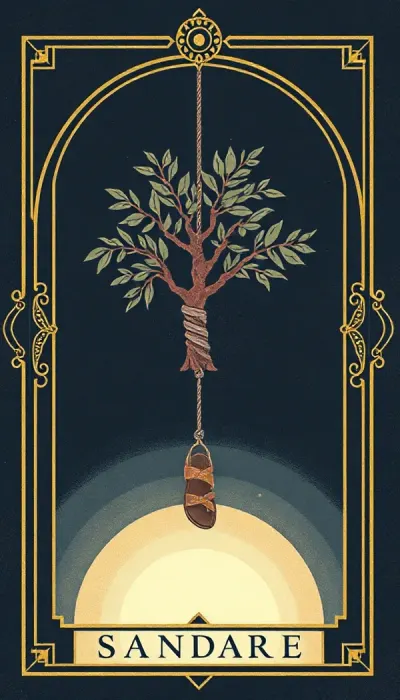 The Hanged Man (reversed) The thread connecting your questions
-
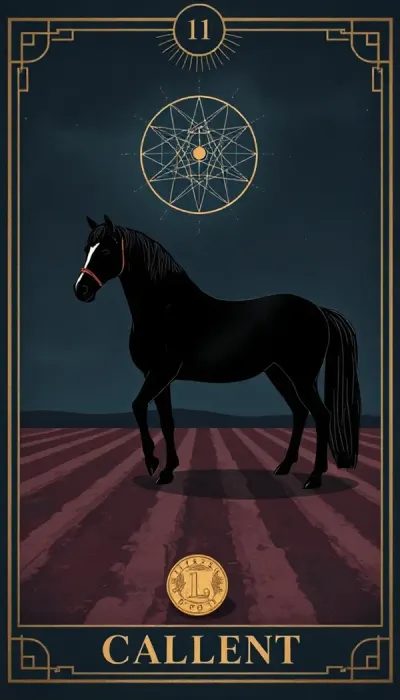 Knight of Pentacles What you may not be seeing yet
-
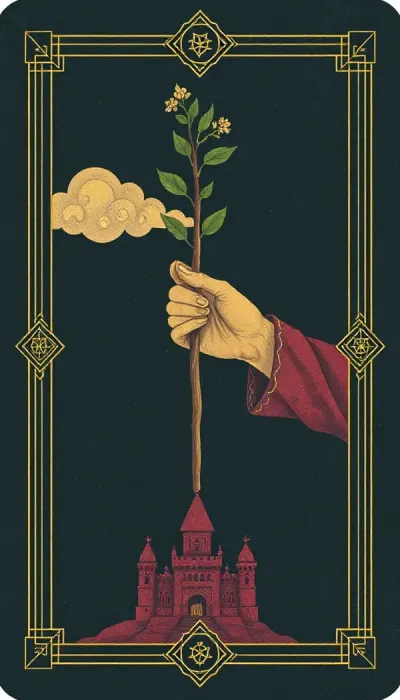 Ace of Wands Your best next move
Across your three questions—whether to stay in contact with your ex, why you stay in a familiar job out of fear, and why you over-function in relationships—a single underlying structure emerges: tolerating an uncomfortable present to avoid the sharp discomfort of a definitive end.
The Hanged Man in reverse represents this precise dynamic. Where the upright Hanged Man indicates an intentional, productive pause for fresh perspective, its reversed orientation points toward a state of self-imposed limbo—a wait that has stopped yielding new insights and has instead turned into martyrdom. In your relationship, maintaining sporadic contact keeps the possibility of reconciliation alive while sparing you the immediate grief of full closure. In your career, remaining in a three-year role that feels stagnant protects you from the potential mistake of leaving, even as it points toward ongoing dissatisfaction. In your relationship habits, giving more than you receive allows you to manage the dynamic and avoid facing whether the other person would step up on their own.
The thread linking these three areas is an implicit decision to stay suspended. Staying in an undefined middle ground feels safer than risking a clear outcome, but this spread suggests that prolonging the pause is costing you more clarity than it provides. The discomfort you feel is not from a lack of options, but from holding yourself in waiting mode.
What you may be overlooking
The Knight of Pentacles in the upright position brings attention to what may be quietly overlooked in your current situation: the unglamorous value of steady, incremental self-reliance. When caught in cycles of emotional suspense or waiting for external signals, routine stability can easily be mistaken for boring stagnation.
This card symbolically highlights that genuine security in career or relationships rarely arrives through dramatic revelations or sudden shifts from others. Instead, it is built through small, methodical, consistent actions taken on your own behalf. You may be overlooking the reliable power of setting simple boundaries and adhering to them daily. Evaluating a job by your actual day-to-day engagement rather than hypothetical worst-case scenarios, or evaluating a relationship by consistent reciprocity rather than potential promise, provides a grounded foundation. Excitement and dramatic effort have been masking the simple efficacy of steady self-respect.
If the current pattern continues
If the current pattern continues, the cards symbolically suggest that your energy will remain tied up in managing low-grade, persistent friction across all three areas. Sporadic texts will continue to offer temporary hope without producing real movement, keeping your emotional space occupied. Your career position will likely remain unchanged, with the daily fear of making a mistake gradually solidifying into long-term dissatisfaction that feels increasingly difficult to break. In your personal life, over-compensating for unbalanced dynamics will become your baseline operational mode, leaving you exhausted while reinforcing relationships where reciprocity is never required. Nothing dramatically breaks under this trajectory; instead, the status quo simply persists, slowly wearing down your confidence and reinforcing the belief that stay-in-place endurance is your only real option.
What could change the direction
Shifting this direction relies on controllable elements within your immediate reach. First, shift your criteria from what a situation could become to what it currently demonstrates. In your personal life, this means stopping the habit of over-functioning to fill effort deficits left by others, allowing dynamics to show their organic balance. In your career, it involves separating realistic skill assessment from anxiety-driven projections, taking structured steps toward exploring options without demanding points toward outcomes upfront. Finally, establishing clear terms for contact with your ex—rather than passively responding—places agency back in your hands. Direct control returns the moment you stop waiting for external clarity and begin making small, intentional choices.
Green flags
- Recognizing your pattern of over-functioning in dynamics and questioning it directly.
- Willingness to evaluate your career based on concrete daily reality rather than fear-based scenarios.
- Seeking personal clarity and self-agency rather than asking for future predictions.
Caution flags
- Treating ongoing silence or sporadic contact from others as an open-ended invitation to wait.
- Mistaking passive endurance of a stagnant job for meaningful security.
- Increasing your emotional effort to compensate for another person's lack of investment.
What is not yours to control
- Whether an ex eventually decides to pursue reconciliation.
- How another person chooses to respond when you stop over-functioning.
- Guaranteeing that a career change will be entirely free of risk or discomfort.
What is yours to control
- Setting clear boundaries around when and how you engage in contact.
- Evaluating your professional skills and options based on current facts.
- Allowing partners to demonstrate their level of reciprocity without intervention.
- Choosing to act despite the presence of mild uncertainty.
Three questions you may need to ask instead
You asked: My ex and I broke up four months ago and we still text every couple of weeks. I keep wondering whether there is a real chance for us or whether I am just holding on.
What boundary do I need to set with my ex so that my daily clarity no longer depends on sporadic messages?
You asked: I have been in the same job for three years and I feel stuck, but every time I think about leaving I talk myself out of it in case it turns out to be a mistake.
What concrete evidence am I using to measure my professional security, beyond the fear of making a wrong choice?
You asked: Why do I keep ending up in relationships where I give much more than I get back?
What early signals of low reciprocity am I ignoring because I assume my effort can fix the imbalance?
The uncomfortable truth
The most challenging reality highlighted by this spread is that staying suspended in uncertain situations has been serving a specific protective function for you. Waiting for an ex to send a clear signal, remaining in a stagnant job out of fear, or over-giving in relationships all shield you from facing immediate, definitive rejection or failure. By keeping options hypothetically open and focusing your energy on managing dynamics, you avoid the vulnerability of making a firm choice and owning its result. The current stagnation is not something happening to you; it is a state you are actively maintaining because the discomfort of ambiguity feels safer than the risk of decisive action.
Your best next move
Start here
Identify one single area of stagnation where you feel a fresh impulse for change, and take a direct, concrete action within 48 hours—such as updating your professional profile or establishing a firm boundary on texting.
Or, if that is not available
- Pause low-value text exchanges for two weeks to observe how much mental energy returns when you aren't waiting for a reply.
- Document three verifiable career skills you possess and submit one application without pre-evaluating if it is a perfect match.
What not to do
- Do not send check-in texts just to gauge another person's emotional temperature.
- Do not talk yourself out of career moves by focusing exclusively on worst-case scenarios.
- Do not step in to fill silences or fix effort deficits when someone backs away.
- Do not wait for absolute certainty before making a standard life decision.
- Do not treat passive waiting as if it were an active strategy for resolution.
If you feel tempted to ask again tomorrow
Drawing additional cards tomorrow about these same topics is likely to become another form of delay, reinforcing the suspended state depicted by the reversed Hanged Man. The cards have already clarified the structural pattern across your choices: holding back out of fear of regret. A meaningful reason to return for another reading would be after you have taken a concrete step—such as establishing clear contact boundaries or applying for a new position—and need to reflect on the new conditions created by your action. Real insight comes from integrating what has been shown, not repeating the query.
Reflection questions
- What decision am I currently avoiding by remaining in a state of waiting?
- If I stopped over-compensating in my relationships, what would actually remain?
- What is the realistic worst-case outcome of making a career change, and how would I handle it?
- In what ways am I choosing familiar stagnation over unfamiliar growth?
- What concrete standard must a person or job meet before I invest my full effort?
The reading in one sentence
Remaining in a suspended middle ground protects you from short-term risk, but real movement requires trusting your ability to handle decisive action.
Final bottom line
Your reading points clearly to a common thread across your life: a tendency to remain in indefinite limbo rather than risk the discomfort of a definitive choice. Whether keeping communication lines open with an ex, staying in a job that no longer serves your growth, or pouring excessive energy into unbalanced relationships, the underlying driver is a fear of potential regret. While remaining suspended offers temporary safety from immediate pain, it continuously drains your energy and delays your personal clarity.
The symbolic presence of the Knight of Pentacles and Ace of Wands highlights that security is not found in waiting for perfect conditions, but in steady, deliberate effort backed by your own initiative. Breaking out of emotional over-functioning requires allowing dynamics to exist as they are without burning yourself out to maintain them. In your career, recognizing that staying put carries its own long-term costs will help you reframe risk as a normal, manageable component of progress.
Moving forward is less about knowing the exact outcome and more about taking ownership of your agency. Establish clear terms for your interactions, evaluate your professional choices based on present facts rather than worst-case projections, and save your high effort for situations where reciprocity is already present. The clarity you are seeking will not come from passive endurance, but from the choices you make on your own behalf today.
Tarot readings on this site are intended for reflection and entertainment. They do not establish facts about another person’s thoughts, predict specific outcomes with certainty, or replace professional medical, legal, financial or mental-health advice.